If you’re facing unexplained abdominal discomfort or concerns about your blood vessels, getting the right answers starts with the right diagnostic test. An abdominal ultrasound provides clear images of the organs and blood vessels in your abdomen without radiation or an invasive procedure.
At Premier Choice Cardiology we perform this test right in our office. It helps evaluate areas such as the abdominal aorta and other structures within the abdomen. This test creates real-time images that can help your doctor identify abnormalities.
Most people find it completely comfortable. Depending on what we’re checking, you may need to skip food for a few hours beforehand so the images stay sharp.
If your doctor has recommended an abdominal ultrasound, give us a call. We’re happy to walk you through the next steps.

An abdominal ultrasound is a non-invasive imaging test that uses high-frequency sound waves to create real-time pictures of the organs and blood vessels inside your belly.
An abdominal ultrasound does not involve the use of any form of ionizing radiation such as that used in X-rays or CT scans. It causes no pain at all and involves no injections or incisions whatsoever. It is simply a practical way for our clinical team to catch potential issues early or rule out vascular concerns with total clarity.
Not every vascular problem causes obvious symptoms. An abdominal vascular ultrasound can give your doctor a closer look at the abdominal aorta and other blood vessels.
This persistent symptom is an indication to undergo a series of tests, particularly when your cardiologist wants to exclude a vascular condition.
Abdominal pain or back pain may occur due to some vascular problems, thus making it necessary to conduct ultrasound imaging in certain cases.
A strong pulse in your abdomen is a common symptom that does not always mean something serious; however, your cardiologist may decide to refer you for imaging tests because of it.
Your abdominal or back pain may become more relevant if you have some cardiovascular risk factors such as high blood pressure, smoking, etc.
If you already know that you have some vascular problems, like an abdominal aortic aneurysm, your cardiologist will use ultrasound to monitor changes.
When your symptoms or your history make your cardiologist worry about your blood flow, you should have a Doppler ultrasound to assess it.
At Premier Choice Cardiology, abdominal ultrasound is offered as part of our cardiovascular and vascular diagnostic services. Your cardiologist can determine whether this test is suitable for you and explain what the results may mean for your care.
Getting ready for an abdominal vascular ultrasound doesn’t have to feel complicated. This radiation-free test uses sound waves to look at blood flow through the major vessels in your belly. Clear images depend a lot on how well you prepare.
Here’s a practical guide that reflects what most vascular labs and imaging centers recommend.
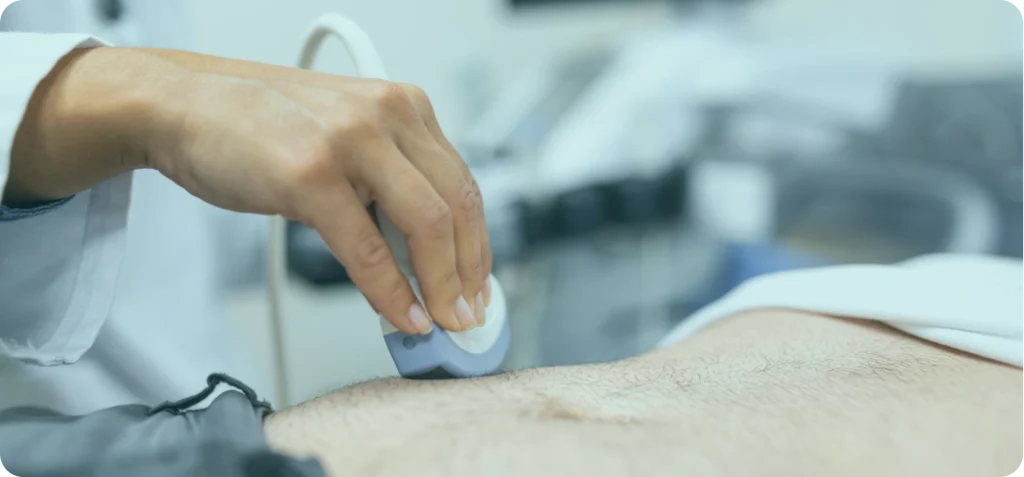
A water-soluble gel is applied to your skin surface to ensure the effective transmission of sound waves. The gel feels cold on your skin but soon heats up. The technologist moves a small probe over your abdomen while applying some pressure. It is normal for you to hear some soft whooshing sounds.
Throughout the scan the technologist may ask you to:
These small adjustments help move bowel gas out of the way and give a better view of the aorta and surrounding arteries. Most people find the pressure mild and the whole experience painless.
An abdominal vascular ultrasound typically takes 20–45 minutes. This is determined by the vessels that have to be examined and how well the images come through. The technician works slowly. You may ask questions or just relax as the pictures are taken.
The images are carefully reviewed once your abdominal vascular ultrasound is finished. The results are analyzed by Dr. Tanveer Ahmad and the professional clinical team at Premier Choice Cardiology. This guarantees that each measurement and blood flow finding is assessed with the knowledge of a board-certified cardiologist who not only knows the technical aspects but also their relevance to the cardiovascular system.
Choosing where to have an abdominal vascular ultrasound matters. At Premier Choice Cardiology, the exam is performed in a fully accredited vascular laboratory in our Lakewood & Brick office. You benefit from modern ultrasound equipment, experienced technologists and direct oversight by Dr. Tanveer Ahmad, MD, FACC.

Our team can guide you if you have been referred for an abdominal ultrasound or your cardiologist has recommended vascular imaging. Contact Premier Choice Cardiology to schedule abdominal ultrasound testing at our Lakewood or Brick location.

Yes. Food and liquids create gas in the intestines. And that gas can block the sound waves. An empty stomach gives us much clearer pictures.
Absolutely. There’s no sedation or recovery time. You can drive or resume normal activities right away.
Dr. Tanveer Ahmad and our experienced clinical team review every study. You will get results interpreted by a board-certified cardiologist.
Standard test results can take anywhere from a few hours to a couple of days. Your physician will explain your test results to you in easy-to-understand terms.
Most abdominal vascular ultrasounds typically last from 20 to 45 minutes. This time may vary depending on how many blood vessels are being examined and their visibility.