Unexplained chest tightness and irregular stress test results are frightening experiences. But guessing about the underlying cause only makes the situation worse. You need to know exactly what is happening inside your arteries. Coronary angiography provides that definitive answer. This procedure visually maps the physical blood flow moving through your heart in real time.

If there’s a clog somewhere in the blood vessels, we need to find it fast before it causes major damage. Blood vessels naturally blend in with the muscles and organs around them on normal scans. We have to make them stand out. Here’s how angiography works:
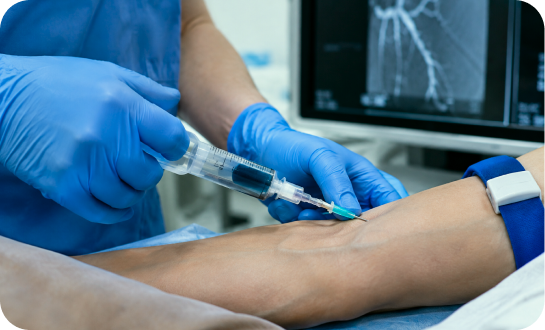
We inject a specialized liquid contrast agent straight into the blood vessels we want to look at.
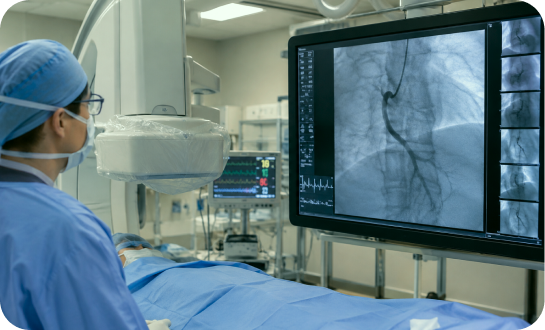
We use a technology called live fluoroscopy. This machine records a continuous X-ray movie. We actually watch the dye move with your heartbeat in real time.
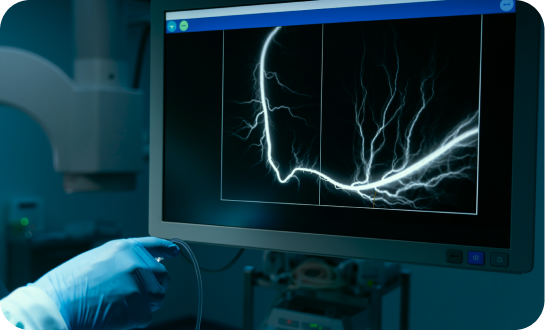
The dye perfectly coats the inner walls of your arteries as it travels. The flow of the dye changes instantly on the screen if a plaque buildup is blocking the path or if an artery is abnormally wide.
Blood vessels run throughout your body. So we customize the test based on your specific symptoms and medical history. Here are different approaches we use to get the best results.
This is the big one we focus on in cardiology. A coronary angiogram lets us check the arteries supplying oxygen to your heart muscle. If you are having symptoms of a heart attack or severe angina. Finding a blockage here quickly saves lives and prevents permanent heart damage.
Sometimes the problem isn't in your chest at all. We use peripheral angiography to evaluate the blood vessels in your arms, legs, hands or feet. This test helps us check for peripheral artery disease if you get intense cramps when you walk or if you notice skin discoloration on your lower legs.
CT angiography is a fantastic and less invasive option for many patients. We just put a standard IV in your arm for the dye instead of threading a long catheter through your body. You then lie down inside a donut-shaped CT scanner. The machine snaps thousands of cross-sectional pictures in seconds and builds a 3D model of your blood vessels.
Magnetic Resonance Angiography skips the X-rays entirely. It relies on strong magnets and radio waves to map out your vascular system. This is an excellent alternative if you happen to be allergic to the iodine dye used in standard angiograms or if your kidneys have trouble handling typical contrast agents.
We don’t order an angiogram just to run a general health check. We use it to hunt down specific structural issues inside your vascular system that other tests simply cannot see. Some of the main things we look for include:
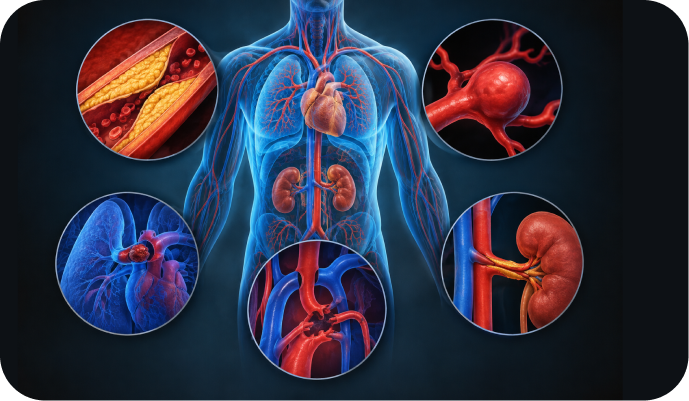
Not every heart hiccup means you need an angiogram. We usually hold off on this procedure unless your earlier tests strongly hinted at a clog in your arteries. If your symptoms point to restricted blood flow and the initial scans left us guessing, we have to take a closer look.
A cardiologist will typically bring up this procedure if:
Getting ready isn’t overly complicated. But you do need to follow the instructions carefully so we can proceed safely on the day of your test.
| When | What You Need to Do |
| The Night Before | Stop eating and drinking solid foods right at midnight |
| Days Leading Up | Adjust your daily medications (only if we tell you to) |
| Procedure Day | Set up a ride with a trusted friend or family member |
| Morning Of | Wear very loose, comfortable clothes and leave your jewelry at home |
Knowing what happens during the procedure takes away a lot of the fear.
Here is a step-by-step look at how the procedure actually unfolds:
A nurse puts a standard IV in your arm to give you a mild sedative. You won't be completely sedated. You'll just feel very relaxed and calm.
We then clean a small patch of skin on either your wrist or your groin area. We next use a local anesthetic to numb the area completely. You might feel a quick pinch from the numbing needle.
The doctor makes a tiny puncture once you are fully numb and inserts a flexible tube called a sheath into the artery. A longer and thinner tube called a catheter slides through that sheath and travels up to the area we are testing. You won't feel this moving inside you because blood vessels don't have nerve endings on the inside.
We release the contrast dye once the catheter is in the perfect position. You might suddenly feel a warm flush spread over your whole body or taste something strange and metallic for a few seconds. Do not panic as it passes quickly.
The X-ray cameras move around you. We get the footage we need. And then we pull the catheter out. We hold firm pressure on the entry site right away to stop any bleeding.
How you recover depends heavily on where we started the procedure. Recovery is incredibly fast if we used your wrist during the procedure. You can sit up right away and walk around shortly after the test ends.
If we used your groin, the rules are much stricter. You will have to lie flat on your back and keep that leg perfectly straight for up to six hours. We do this to make sure the large artery seals up properly and doesn’t cause a hematoma.
The absolute best part about this test is that you don’t have to wait weeks for a stressful phone call. The imaging is instant. Your cardiologist, Dr. Tanveer Ahmed, will often review the actual pictures with you before you even leave the recovery room. We make sure to explain all treatment options in case of minor or severe blockages.
Like any medical procedure, there are a few risks to keep in mind, even though serious complications are exceptionally rare.
| Common Side Effects | Rare Complications |
| Bruising & soreness | Blood vessel damage |
| Small lump | Excessive bleeding |
| Warm flushing sensation | Nephropathy |
| Mild allergic reactions | Blood clots |
| Minor site infection | Arrhythmias |
At Premier Choice Cardiology, our approach is built around coordinated care and personalized attention for every patient referred for coronary angiography.Reasons patients and referring providers trust us for angiography include:
Your scan is handled by board-certified cardiologists who look at complex artery issues every single day. We know exactly what we are looking for.
If we spot a blocked artery, we don't leave you hanging. We map out your next steps immediately, whether that means a simple medication change or talking about a stent.
We are highly protective of your health. We only recommend this specific scan if we absolutely need the answers to guide your care.
Prepping for a medical procedure is annoying enough. Our staff takes care of the confusing details, from medication reviews to booking your follow-up visits.
You shouldn't have to commute for hours to find a doctor you trust. We provide advanced heart diagnostics right here in Lakewood and Brick.
If you or your doctor has recommended an angiogram, Premier Choice Cardiology is here to help. Our team will guide you through every step from pre‑procedure planning to recovery and follow‑up.

A normal session can last from 30 min to up to 2 hours. You should plan a half-day or longer at the medical facility.
Most insurance plans cover medically necessary angiography. Our office can help check your benefits and answer billing questions beforehand.
Wrist access often means less bleeding risk and quicker recovery for walking. Groin access is still used when it’s the better option for your anatomy.
Angiography is the imaging part. Angioplasty is the treatment that opens a blockage, often done right after the pictures are taken if needed.
Sometimes yes, if a significant blockage is found and it’s appropriate. Other times we gather the information first and plan treatment later.