Some patients are referred for a pre-operative cardiac evaluation before noncardiac surgery. Whether you need one depends on your medical history, symptoms, functional capacity, and the type and urgency of your planned procedure.
We offer pre-operative cardiac evaluations and, when clinically appropriate, echocardiography at Premier Choice Cardiology. Our assessments are informed by current professional guidelines, including AHA/ACC recommendations and relevant European guidance, to provide your surgical team with information that supports perioperative planning.

The term cardiac clearance is a little bit misleading. It does not mean that the cardiologist is declaring the patient 100% safe for the surgery. Actually, before surgery, cardiac evaluation is necessary. The main purpose of this evaluation is to check the chances of heart-related complications before or after the surgery.
Both general anesthesia and surgery place additional stress on the heart; during surgery, the heart rate may rise, & there can also be alterations in blood pressure, together with an increased demand for oxygen in the heart muscle.
An echocardiogram is a non-invasive test, which means there is no need for surgery or an incision in the body. With the help of ultrasound waves, the heart’s structure and functioning can be seen in real time.
This test helps in assessing the risk associated with the heart before surgery. If an echocardiogram shows that there are problems with heart pumping or structure, then the anesthetist can create a plan according to the patient’s condition.
Surgical Risk Categories
The need for an echocardiogram is not the same for every patient. It depends on what type of surgery is being performed.
| Low Risk: Less than 1% | Intermediate Risk: 1% to 5% | High Risk: More than 5% |
|---|---|---|
| Dental surgery, Eye surgery Breast surgery, Superficial surgery, Minor orthopedic surgery | Abdominal surgery, Major orthopaedic surgery, Prostate surgery, Gynaecological surgery | Aortic/major vascular, peripheral vascular, lung, liver resection. |
Whether you need an echocardiogram is a clinical decision based on your symptoms, your medical history, & the type of surgery you’re having. We follow the 2024 AHA/ACC guideline, which uses a step-by-step approach to cardiac assessment before surgery, and we use the 2022 ESC guidelines as a secondary reference. Your healthcare team will determine which tests, if any, are needed.
If you have heart failure, an updated echocardiogram may be appropriate when you have new or worsening symptoms, a change in your clinical condition, or no recent assessment that is relevant to the planned surgery. A stable patient does not automatically need a repeat echocardiogram solely because 12 months have passed.
If a doctor has heard a new heart murmur, or if you have known valvular disease (such as aortic stenosis or mitral regurgitation) with worsening symptoms, an echocardiogram is required to quantify the severity before any elective surgery.
Poor functional capacity may increase the need for a closer preoperative assessment, especially before elevated-risk surgery or when symptoms or known heart disease are present. Dr. Tanveer Ahmad will consider your symptoms and other findings when deciding whether additional heart testing is appropriate.
Doctors may use the RCRI to help estimate the risk of heart-related complications before surgery. The assessment considers factors such as certain heart conditions, previous stroke, diabetes treated with insulin, and kidney function. A higher score does not automatically mean that an echocardiogram is required.
An echocardiogram taken before surgery gives a detailed, real-time evaluation of the structure and function of your heart, and our consultants look at the factors which have a direct bearing on anaesthetic safety and perioperative risk.
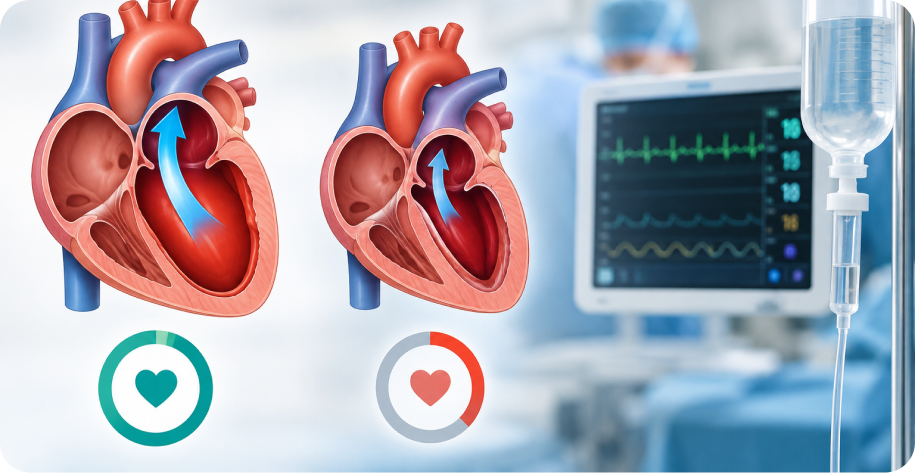
A reduced ejection fraction can be associated with increased perioperative risk, particularly when it is accompanied by heart-failure symptoms or recent worsening. The surgical and anesthesia teams consider the ejection fraction together with symptoms and other risk factors
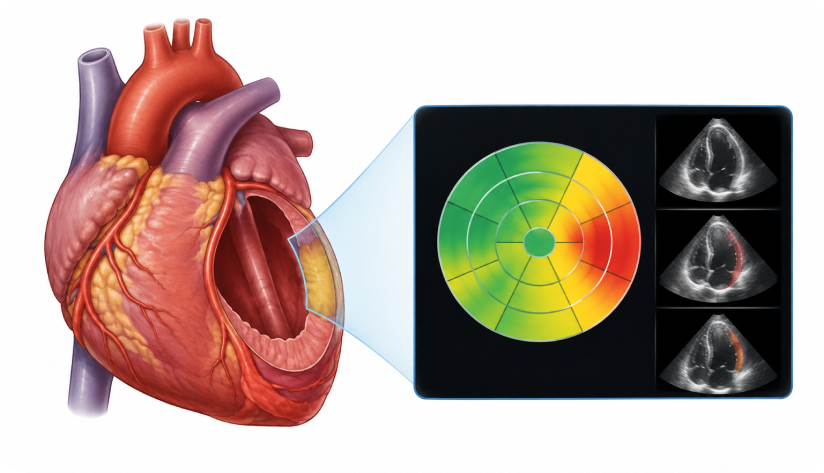
We examine the heart muscle to look for regions in which it is not contracting normally, as this may be a sign of underlying coronary artery disease.
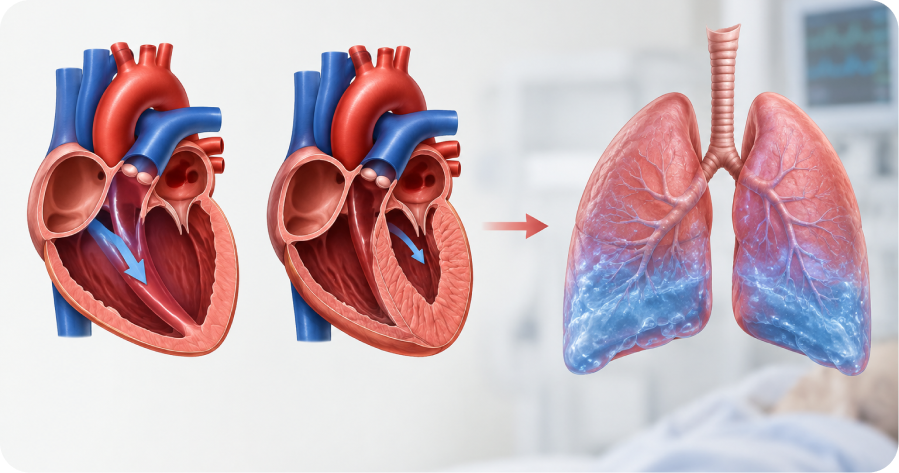
We assess the extent to which the heart relaxes and is filled with blood. Having severe diastolic dysfunction raises the risk of developing post-operative pulmonary oedema.
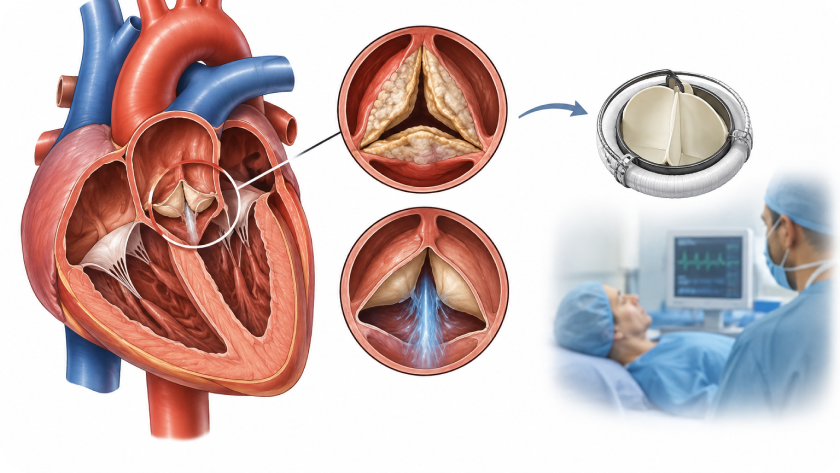
We quantify the severity of any valve disease. Severe aortic stenosis is a major risk factor for perioperative mortality and may require valve replacement before elective non-cardiac surgery.
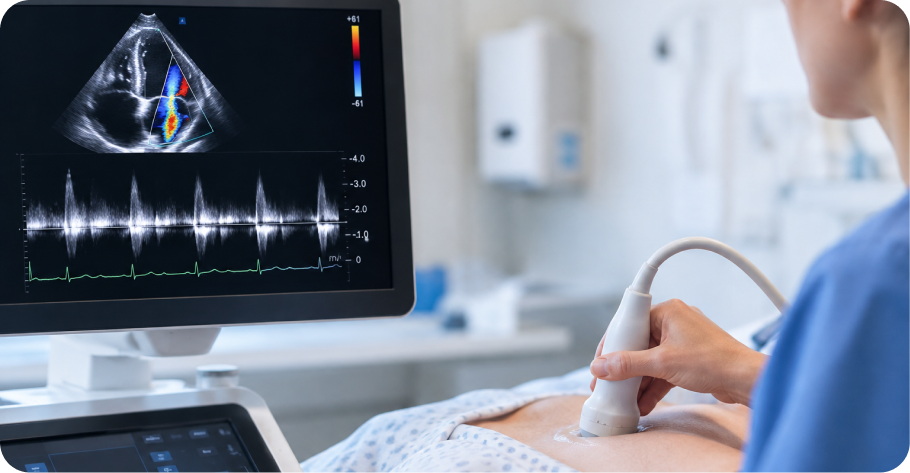
We estimate pulmonary artery systolic pressure to rule out pulmonary hypertension, which complicates anaesthetic management.
Bring a complete list of all medications to your pre-operative clearance appointment, including the over-the-counter drugs, supplements, and herbs you take regularly. A copy of your medical records, any previous cardiac test results, and recent laboratory results to help provide context for your current health status.
If your pre-operative evaluation reveals a concern, Dr. Tanveer Ahmad may recommend additional tests to further investigate the issue or adjust your medication schedule. In more serious cases, he might postpone your procedure until the medical team resolves the issue, or schedule a consultation with a specialist to help you manage your condition. This process may feel inconvenient, but identifying these health issues before the surgery will greatly improve your procedure’s potential outcome.
Premier Choice Cardiology accepts many major insurance plans. Please contact Premier Choice Cardiology to confirm if they accept your insurance. Accepted Insurance Plans,






Premier Choice Cardiology has offices in Lakewood and Brick, NJ. This makes it easier for patients in Ocean and Monmouth Counties to see a cardiologist close to home. Pick the location that’s most convenient for you and reach out to our team to book your appointment.

At Premier Choice Cardiology, the care provided is based on your particular heart health requirements, & the practice is headed by Dr.Tanveer Ahmad, MD, FACC, who is board-certified in both internal medicine & cardiology.
Our clinics are in two different locations in Ocean County. You can visit the premises that is closer to your home during clinic hours,
Dr. Tanveer Ahmad has been widely recognized for listening attentively to the concerns of patients on US News.
Your Blood flow tests are examined in our own accredited vascular lab. You will spend less time in the hospital and have less inconvenience for you
Patients with a history of heart disease can discuss their condition, symptoms, and previous test results with Dr. Tanveer Ahmad before surgery.
When needed, relevant findings can be shared with the surgical team to support decisions about further testing, treatment, or precautions.
Our board-certified cardiologists use state-of-the-art technology to offer comprehensive cardiac evaluation services, including advanced diagnostic testing and personalized risk assessment.
Pre-operative (pre-op) clearance is a comprehensive medical evaluation conducted before a surgical procedure to ensure you are healthy enough to safely undergo the surgery and anesthesia
A pre-operative (pre-op) checklist includes medical tests, lifestyle rules, administrative tasks, and day-of-surgery instructions to ensure you are safe and ready for your procedure.
A cardiac or pre-operative medical clearance is typically valid for 30 days prior to your scheduled surgery date.
Cardiac clearance typically involves a clinical evaluation and a selection of diagnostic tests tailored to your medical history, current symptoms, and the risk level of your planned surgery
ECGs and echocardiograms are two commonly used cardiac tests, but the appropriate test depends on your symptoms, medical history, and the type of surgery being considered.