We know what it feels like to see your heart needing a closer look. Cardiac catheterization offers a clear, minimally invasive way to see what’s happening inside your coronary arteries. You do not need open surgery. Dr. Tanveer Ahmad places a small flexible tube into your wrist or groin and looks inside to see if there are any potential blockages, checks blood pressure inside the heart and checks how well it pumps.

Having a heart cath helps you know what’s wrong with your heart if you are feeling unwell or have confusing test results. We help Ocean County and Monmouth County patients feel good about coming to us because we take the time to explain what’s going on and to make sure you’re comfortable.
Cardiac catheterization is a medical procedure where a doctor threads a thin & flexible tube called a catheter through a blood vessel from the wrist or groin to evaluate and treat heart conditions. It is also known as a heart cath.
A heart cath is performed when doctors suspect there’s something wrong or when symptoms suggest a heart condition such as coronary artery disease or other structural problems. The tests can provide answers that can help physicians plan their next step or surgery.
The procedure helps evaluate:
There is no standard or generic approach in cardiology. Your doctor will pick the accurate method needed to get the right data depending on what your specific symptoms point toward.
This approach targets the left side of your heart, specifically the left ventricle. That's the powerhouse chamber responsible for pumping oxygen-rich blood out to your entire body. We use this method heavily to hunt for blocked coronary arteries. It also shows us exactly how forcefully your left ventricle is squeezing with each heartbeat.
The right side of your heart has a different job. It handles sending blood into your lungs to pick up oxygen. So, a right heart cath isn’t typically looking for plaque blockages. Instead, it measures the pressure and oxygen levels inside the right chambers and the pulmonary arteries. It’s absolutely crucial for diagnosing tricky conditions like pulmonary hypertension or advanced right-sided heart failure.
This almost always happens alongside a left heart cath. The doctor injects a special iodine-based contrast dye through the tube once the catheter is in position. An X-ray camera records the dye moving in real time. Your arteries light up on the monitor like a roadmap. This exposes every single narrow spot or blockage instantly.
A cardiac catheterization often becomes the next clear step when routine tests leave questions unanswered. It gives your cardiologist a direct look at blood flow, pressures and structure inside the heart.
Here are the situations where a heart cath is most often recommended:
Getting ready for a heart cath is mostly about following a few clear steps so the day goes smoothly & safely.
Here is a practical guide based on what we walk our patients through every day.
| What to Do | Why It Matters |
| Stop eating and drinking | An empty stomach lowers the chance of nausea from sedation or contrast dye |
| Review all medications with your cardiologist | Some blood thinners or other drugs may need temporary adjustment |
| Tell the team about allergies | Particularly important for contrast dye, iodine or latex |
| Arrange a ride home | You will not be able to drive yourself |
| Bring a current medication list | Helps the team make real-time decisions |
| Wear comfortable clothes | Makes changing and recovery easier |
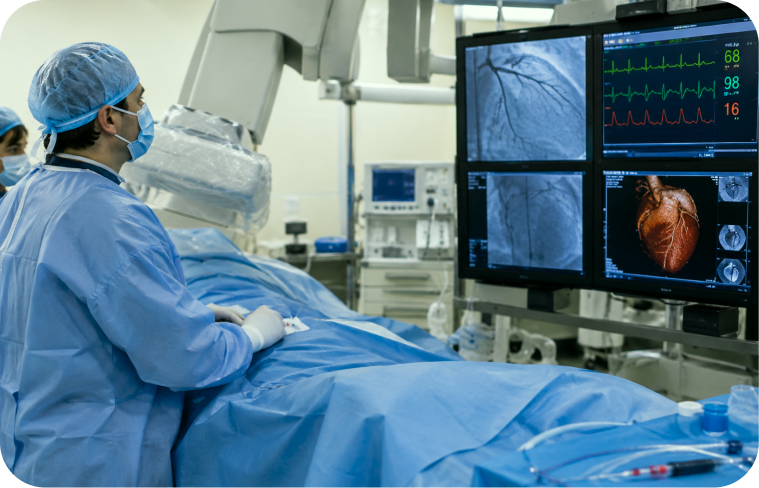
You'll lie on the procedure table once you get into the cath lab. The nursing team hooks up standard monitors to watch your vitals. We will start an IV to give you a mild sedative. You will just feel incredibly relaxed and completely unbothered. You can still talk to us.
The doctor will prep either your wrist or your groin. You will feel a quick pinch from the local anesthetic, followed by some dull pressure. That’s it for the pain. The doctor then slides a tiny plastic sheath into the blood vessel to act as a safe doorway.
The cardiologist gently threads a long, flexible tube up to your heart using a live X-ray screen. You literally won't feel this happening inside your chest because the inside of your arteries lacks nerve endings.
As we insert the tube, we push a contrast dye through the tube. The doctor checks blood flow and heart rate. If they see a severe blockage, they can treat the artery with a medical balloon or stent.
The tube is taken out when we have all the information we need. We press down on your wrist or groin to close the artery and stop bleeding. A typical test takes about 30 to 60 minutes.
The body just needs to heal the entry site after the procedure. If the catheter went through the femoral artery in your groin, you have to lie flat on your back for a few hours. No moving that leg. If they used the radial artery in your wrist. Recovery is much faster for that and you can usually sit right up and walk around shortly after.
Cardiac catheterization is a common and safe procedure. But it carries risks like any other medical procedure.
You need a care team that blends elite clinical expertise with human compassion. Patients across Ocean and Monmouth Counties trust us with their heart health because we put people first.
Here is what truly sets our practice apart:
Dr. Tanveer Ahmad handles diagnostic and interventional catheterizations and advanced imaging every day. He brings exceptional skills to every procedure.
We use current imaging systems and stick to minimally invasive methods whenever possible. That usually means clearer answers and lower risk.
Our cardiovascular labs are fully accredited. You get the results without driving all over town or waiting on outside facilities.
We don't believe in generic medicine. We take the time to look at your symptoms and your personal goals before designing a strategy that actually fits your life.
We are here for you at every single stage of your heart health journey from early preventive cardiology and risk management to advanced interventional procedures.

A simple heart cath to check for a blockage usually takes 30-60 minutes. If we need to open a blockage with a stent, it may take a bit longer.
We can treat it during the same procedure with a balloon or stent. If something more complex is needed we’ll discuss all the options with you right then.
Tell us right away. So we can take extra precautions and give medications beforehand if needed. True allergic reactions are uncommon but we plan carefully.
Dr. Tanveer Ahmad has extensive experience in both diagnostic and interventional catheterizations. He performs these procedures regularly.
It’s considered the gold standard for looking at the coronary arteries and measuring pressures inside the heart. It gives real-time details that other tests can’t always provide.