The signs and symptoms involving the heart such as chest pressure and palpitations require solid answers. Invasive cardiology will give you insight into what is actually going on inside your veins and chambers of your heart when non-invasive tests prove to be inconclusive.
At Premier Choice Cardiology, Dr. Tanveer Ahmad and his team specialize in giving you an accurate diagnosis of vascular blockages and heart rate disturbances without having to undergo any surgery.


We provide comprehensive diagnostic testing right here in New Jersey, serving the communities of Lakewood and Brick. Our focus is on figuring out the root cause of your cardiac symptoms using the most advanced technology available.
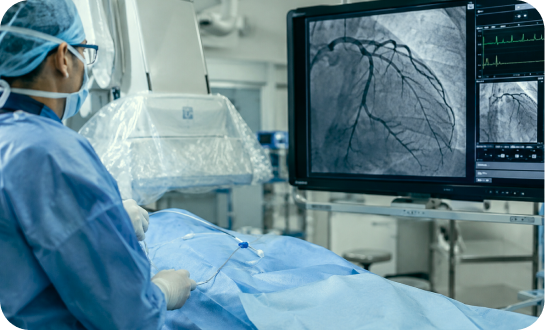
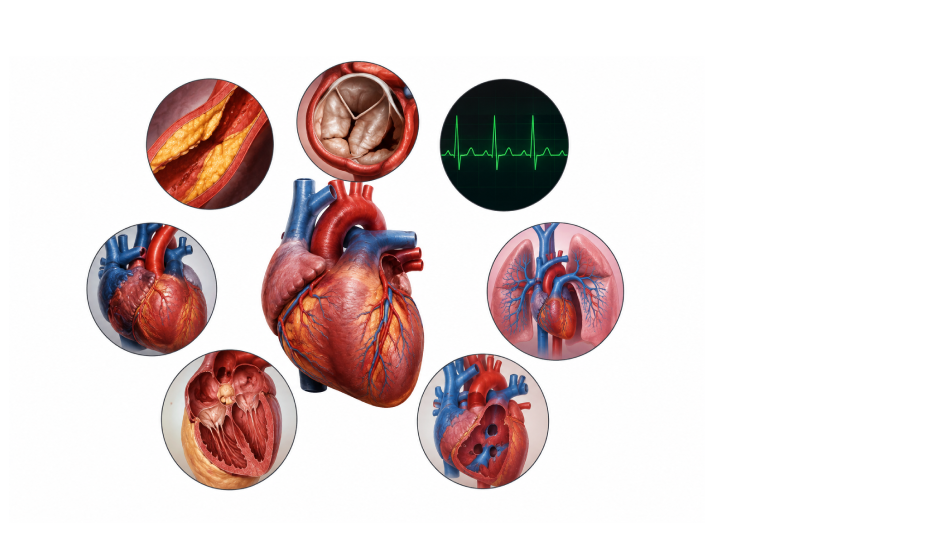
Plaque buildup happens slowly. But it can severely restrict the blood supply your heart relies on to function. An angiogram is the most direct way to spot these hidden roadblocks. We carefully thread a thin tube into a blood vessel and release a safe contrast dye. An X-ray camera records a live movie of your arteries as the dye flows. We see it immediately on the screen if an artery is narrowing, letting us map out your treatment with total precision.
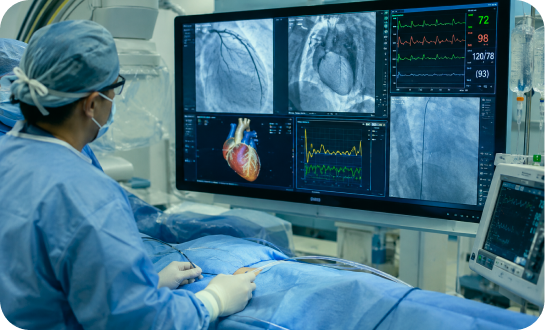
An angiogram just looks at the arteries. And a full cardiac catheterization measures how well your entire heart actually works. We use a catheter to step inside and measure how the whole system is holding up under pressure. We measure blood pressure in your specific heart chambers and test local oxygen levels. We also watch how crisp the valves open and close. It gives us a complete & real-time readout of your heart's overall pumping power.
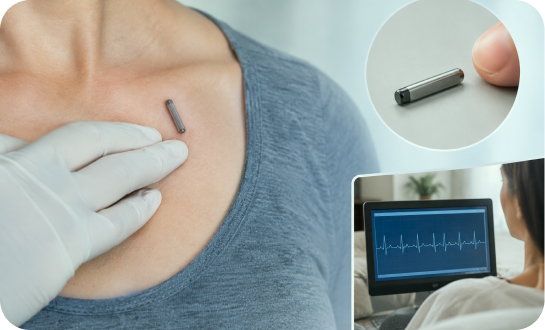
Heart arrhythmias are incredibly frustrating because they often hide. To catch elusive symptoms, we use an Implantable Loop Recorder. We slide this tiny monitor just under your skin during a quick office visit. It works like a 24-hour security camera for your chest and silently tracks your daily heart rhythm for up to three years so we never miss a beat.
Figuring out the right test isn’t something you need to worry about deciding on your own. It highly depends on your unique symptoms, your medical history and the results of your previous tests.
For instance, if your main complaint is severe chest tightness when you walk up the stairs, we are most likely going to recommend an angiography to check for blocked pipes. On the other hand, if you are passing out randomly without warning, an Implantable Loop Recorder might be the first thing we suggest to catch an elusive electrical glitch.

The terminology in cardiology can get confusing pretty fast. Patients frequently ask us about the difference between invasive, non-invasive and interventional procedures.
Below is a detailed comparison to help clear up the differences:
| Feature | Non-Invasive Cardiology | Invasive Cardiology | Interventional Cardiology |
| Primary Purpose | Initial screening and basic diagnosis | Advanced diagnosis and precise measurement | Treatment and repair of structural issues |
| How It’s Done | From outside the body using external machines | Inserting catheters or small devices inside the body to look around | Using catheters to deliver treatments like balloons or stents |
| Skin Breaking? | No cuts or incisions required | Minor puncture (usually in the wrist or groin) | Minor puncture (often done during the same session as the invasive test) |
| Examples | EKGs, Holter monitors, Echocardiograms, General Stress Tests | Diagnostic Cardiac Catheterization, Angiography, Loop Recorders | Angioplasty, Stent placement, TAVR |
| Pain Level | Painless | Very mild discomfort | Very mild discomfort |
| Setting | Standard clinic room | Specialized Catheterization Lab | Specialized Catheterization Lab |
Medications have their limitations and not many people want to undergo heart surgery. Invasive cardiology falls somewhere in between these extremes. It delivers hard facts and actual treatments without keeping you stuck in a hospital bed for days. Here is what makes this approach so practical for our patients:
Here is what makes this approach so practical for our patients
Ultrasounds and external monitors are helpful but they leave room for doubt. Getting a catheter directly into your arteries shows us the exact location of a blockage.
If we find a narrowed vessel, we can typically clear it and drop a stent in right away. You get diagnosed and treated in a single afternoon.
We usually access the heart through a small spot on your wrist or groin. There is no major chest incision. That means drastically less pain and a much faster recovery.
These methods avoid the heavy risks that come with traditional operations. Your chances of complications drop and recovery time is slashed.
Restoring blood flow makes a real difference. Many people feel that crushing chest tightness and shortness of breath fade before they even leave the clinic.
The internal measurements we pull give us a personalized blueprint. We use those exact numbers to map out your future medications and follow-up care.
Trusting a doctor with your heart is a big deal. We get that. At Premier Choice Cardiology, we skip the confusing medical jargon and focus on giving you real answers and hands-on care. Here is why patients trust us:
You are treated by Dr. Tanveer Ahmad, MD, FACC, a board-certified expert who knows exactly how to track down stubborn cardiovascular issues.
There is no need to deal with a stressful commute just to get world-class testing. We run fully equipped and state-of-the-art clinics right in Lakewood and Brick.
Say goodbye to doctors who keep one hand on the doorknob. We actually listen to your symptoms and explain the reason behind every single test.
We simply do not guess. We use the latest invasive and non-invasive tools to find the exact root cause behind your symptoms.
Getting a diagnosis is just the start. We make sure you walk out of our office with a realistic action plan to protect your heart moving forward.
You don’t want to ignore your heart symptoms. If you’ve been having heart-related symptoms or if another doctor has suggested you might need a cardiac catheterization, don’t wait to get answers. Call Premier Choice Cardiology today to schedule a consultation with Dr. Tanveer Ahmad. We’ll talk to you about your medical history and help you determine whether an invasive cardiology procedure is right for you.
No, invasive cardiology is a largely diagnostic procedure which is minimally invasive. We do not open your chest or stop your heart. We only enter through a small blood vessel in the wrist or groin.
No. You might feel a slight pressure as we move the catheter. But you shouldn’t feel any sharp pain.
It remains one of the most precise ways to see the inside of the coronary arteries and measure how well blood is flowing.
You’ll need to wait at least 24 hours. Sometimes longer if a stent was placed or if you received sedation. We’ll give you specific guidance before you leave.
Most plans cover medically necessary catheterization and angioplasty. Our office can help check your benefits and explain any out-of-pocket costs.