Heart palpitations, sudden dizzy spells or a racing pulse usually have terrible timing. They tend to happen when you’re doing normal work or trying to sleep. But never when you are actually sitting in your cardiologist’s office. A cardiac event recorder is often the best way to figure out what is really going on. If that frustration sounds familiar.
At Premier Choice Cardiology, we offer cardiac diagnostic tests which help our patients gain insights into their cardiac health status. An event recorder is a portable device that records your heartbeat whenever you start feeling any symptoms. The activation of this device can either be done manually by you or automatically depending on some changes in the rhythm.

Since the heart symptoms are never consistent at any point in time, a one size fits all solution just won’t do. So, we try to customize our solutions according to your needs.
Looping memory monitors use standard sticky chest patches and wire. This keeps a record of both pre-event and post-event events once the symptoms are noted and the device is activated by you.
Symptom event monitors are portable devices. You just carry it in your pocket or purse. You activate the device to record your heart rhythm when you feel symptoms. Some models require you to place the device against your chest.
Wireless patch recorders are small & adhesive devices worn directly on your chest. These look and feel like a water-resistant bandage stuck directly to your upper chest. They continuously monitor your heart for up to 14 days while you sleep and go about your normal life.
An implantable loop recorder is a small device placed under the skin of your chest during a minor procedure. It acts as a long-term safeguard, tracking your heart for up to three years to catch those incredibly rare disturbances or symptoms.
Our cardiology team typically recommends an event recorder if you are dealing with unpredictable issues that only strike every few days or even months.
You may benefit from event recorder testing if you experience:


An event recorder does not diagnose every heart problem on its own.. But it gives your cardiologist a recording of your heart’s electrical activity during the moments that matter most. Conditions and rhythm problems an event recorder may help detect include:
An event recorder does not diagnose every heart problem on its own.. But it gives your cardiologist a recording of your heart’s electrical activity during the moments that matter most.
Conditions and rhythm problems an event recorder may help detect include:
An event recorder tracks your heart’s electrical activity to help us figure out those frustrating symptoms. Unlike a quick office EKG, this device puts you in control, capturing your exact heart rhythm the second an episode actually hits.
Here is what the process usually looks like:
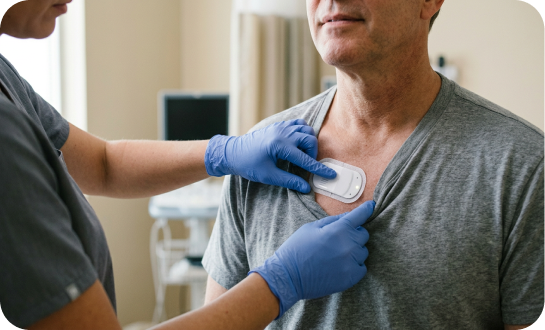
We will either attach a few sticky sensors to your chest or apply a simple wireless patch. Our team will guide you on how your specific device works before you leave.

Just go about your normal routine. We will give you easy guidelines for doing your normal routine work while wearing it.
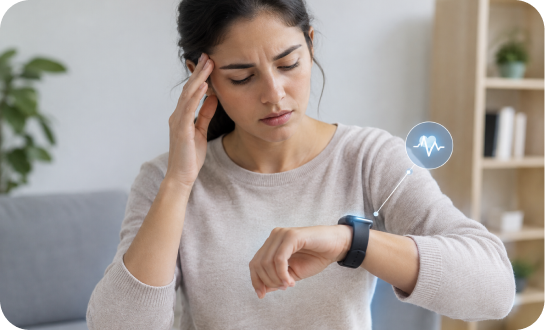
You just press the button to record the moment you feel dizzy or notice a racing pulse. Some smart models even catch these abnormal rhythms automatically.
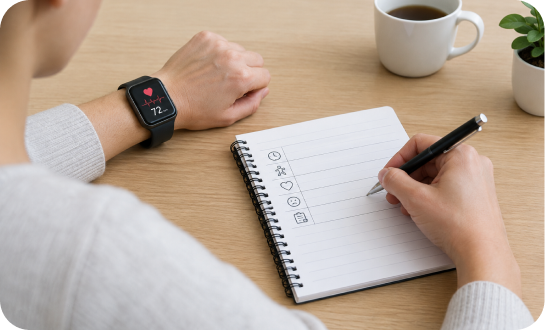
You may be asked to note when symptoms occur and what you were doing at the time. This helps your cardiologist compare your experiences with the recorded heart rhythm.
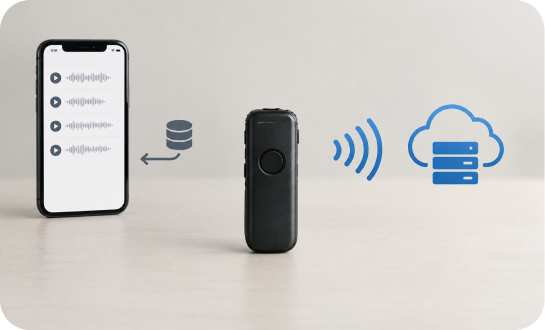
Your recordings are either saved securely on the device for us to download later. Or they are transmitted straight to a monitoring service wirelessly.
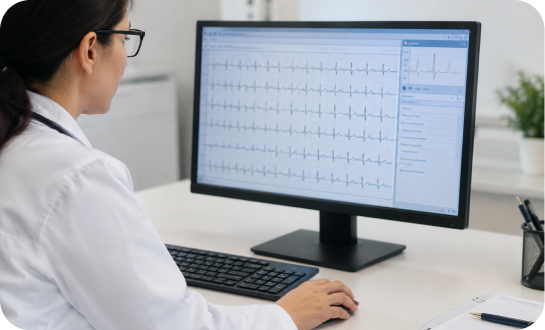
Your actual rhythm recordings will be closely examined for evidence of any arrhythmias and to determine the proper treatment for you.
The process of doing an event recorder examination is relatively painless and does not involve any use of anesthesia or a long procedure. The recording process itself occurs in most cases while you carry on with your regular activities.
Here’s what to expect:


Using an event recorder correctly makes a real difference in the quality of your results. Your Premier Choice Cardiology team will give you device-specific instructions.
The steps below cover what most patients need to know.
You typically wear a cardiac event recorder for several days up to 30 days or until you experience and record a symptom. Here is a duration breakdown by type:
| Monitor Type | Typical Duration |
|---|---|
| Patch-Style Recorders | 10 to 14 days |
| Standard External Recorders | 14 to 30 days (2 to 4 weeks) |
| Implantable Loop Recorders | Up to 3 years or longer |
| Holter Monitors | 24 to 48 hours |
Event recorders are incredibly safe. They simply record your heart’s natural electrical signals without sending any shocks or energy into your body. The overall risks are practically zero. The few side effects you might experience are minor:
Here is why you have absolutely nothing to worry about when you sit down for a device update
Choosing the right cardiology practice matters when you are trying to find answers for symptoms that come and go. At Premier Choice Cardiology, we take the anxiety out of the diagnostic process.
Here is how we support you from the moment you walk in:

Dr. Tanveer Ahmad is board-certified in cardiovascular disease and internal medicine. He brings extensive experience to the evaluation of heart conditions.

We operate right in your community. With our primary clinics located in Lakewood and Brick, NJ, picking up your monitor and coming back in to discuss your results is always a quick trip.

Nobody wants to be weighed down by outdated medical equipment. We supply the latest profile monitors that let you live your normal life while we track your symptoms.

Sitting around waiting for heart test results is a terrible feeling. We prioritize fast turnaround times. We sit down with you and explain exactly what is going on in plain English.

Our care doesn't end when your event recorder monitoring is complete. We will explain the findings and guide you toward the next steps in managing your heart health.
Ready to get clear answers about your heart rhythm? Call us today or request an appointment online. Our team will walk you through every step and help you feel at ease. We are here when you are ready.
There will be either a recording message or a light that will keep blinking. Make sure you check the electrode connection if there’s something unusual or a loose lead warning.
A Holter monitor records every single heartbeat continuously. But you usually only wear it for 24 to 48 hours. An event monitor is worn for much longer but it only saves the data when you feel a symptom.
Yes. We encourage you to do your usual exercises. It is important because we need to observe how your heart functions during those activities.
There are many recorders which store a short segment of the rhythm before you press the button. That means that even if the symptom is very short, we will have enough data to evaluate your condition.
It’s excellent for catching intermittent arrhythmias. But it’s not a substitute for other tests your doctor might still recommend.