Peripheral Vascular Disease Treatment in Lakewood & Brick, NJ
If you experience leg pain while walking or exercising, you may have peripheral vascular disease (or PVD). At Premier Choice Cardiology, peripheral vascular disease is treated by Dr. Tanveer Ahmad, board-certified in internal medicine and cardiology, at two New Jersey locations in Lakewood and Brick
Seek emergency medical care immediately for sudden leg pain, a cold or pale limb, new numbness, or weakness.
What Is Peripheral Vascular Disease?
Peripheral vascular disease (PVD) is a general term for disorders affecting blood vessels outside the heart and brain. Peripheral artery disease (PAD) is a type of vascular disease that commonly occurs when plaque builds up in the arteries supplying the legs, reducing blood flow. PAD is also associated with an increased risk of coronary artery disease, heart attack, and stroke.
Recognizing the symptoms is the first step toward diagnosis.
What Are the Symptoms of Peripheral Vascular Disease?
Symptoms of Peripheral Vascular Disease include muscle pain and cramping in your legs while walking that usually disappear when you are doing rest. This is known as claudication.
Calf cramping after walking 1 block is one example. PVD produces other warning signs
Numbness or weakness in the legs
Coldness in the lower leg or foot
Toe or foot sores that heal slowly
A weak or missing pulse in the leg or foot
You can see a change in the color of your legs
Some patients have no symptoms, so risk factors guide testing.
Who Is at Risk for Peripheral Vascular Disease?
Vascular disorders like Peripheral Vascular Disease or PVD, Peripheral Artery Disease, or Coronary Artery Disease are usually caused due to a condition known as atherosclerosis. In this condition, fat layers referred to as ‘plaque’ accumulate along the walls of the blood vessels, making it difficult for blood to flow properly. The former disorder attacks the blood vessels of the legs, while the latter attacks those of the heart muscle.
All blood vessel diseases also may be caused by an injury to your limbs, blood vessel inflammation, or radiation exposure. In addition to your age, other factors that increase your risk of developing a blood vessel disease include:
Diabetes
Smoking
High blood pressure
High blood cholesterol
Age 65 or older
Overweight or obesity
Family history of heart disease
Depending upon the risk factors and the symptoms, Dr.Tanveer Ahmad will analyse and tell you which tests are necessary for you.
When Should You See Dr. Tanveer Ahmad for Leg Pain?
If you experience leg pain that appears while walking and stops with rest, you should visit Dr. Tanveer Ahmad.
How Does Premier Choice Cardiology Diagnose Peripheral Vascular Disease?
When you come to the clinic, Dr. Ahmad starts with a brief discussion with you about your overall health. He will start with your symptom review and a pulse check in the legs and feet, and then proceed with the following tests.
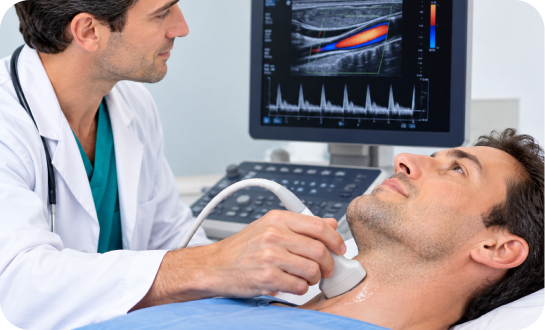
Carotid Doppler
This is a painless ultrasound test that is performed at the office. In this test, the carotid arteries in your neck are checked to see whether they are narrow or not.
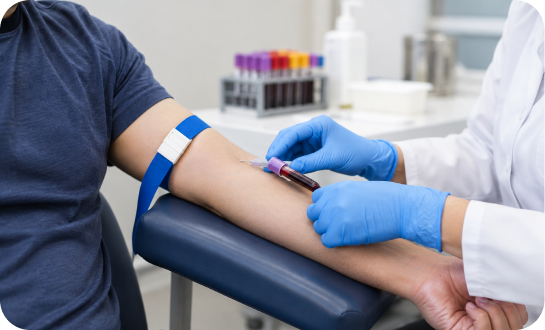
Blood tests
Blood tests are done to check for things that increase the risk of PAD, such as high cholesterol and high blood sugar. They also help Dr. Ahmad decide which medicines you may need to lower your risk of heart attack and stroke.
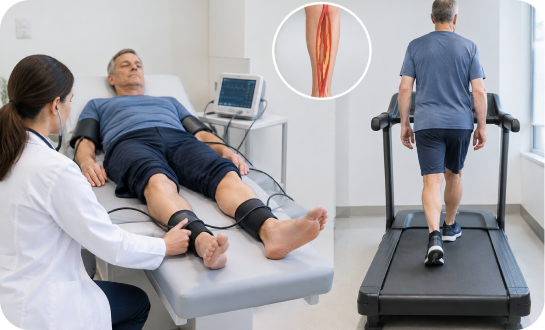
Ankle-brachial index (ABI)
It compares the blood pressure at your ankle with the blood pressure in your arm. A low ratio suggests narrowed leg arteries. If your resting result is normal but you still have leg symptoms, you may be asked to walk on a treadmill and be tested again.
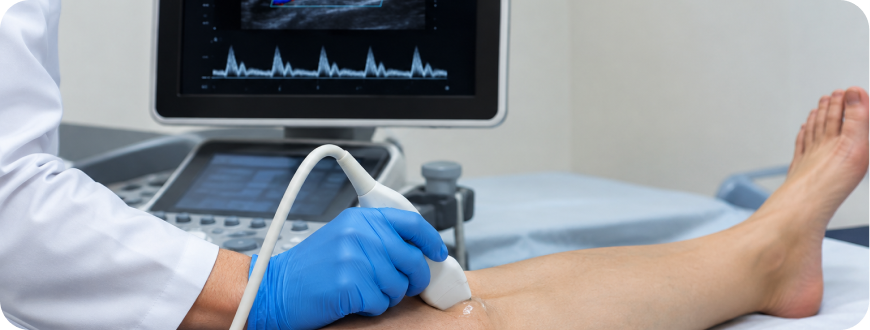
Ultrasound of the legs or feet
Sound waves create pictures of how blood moves through the blood vessels of the legs or feet. Doppler ultrasound is a special type of ultrasound used to spot blocked or narrowed arteries.
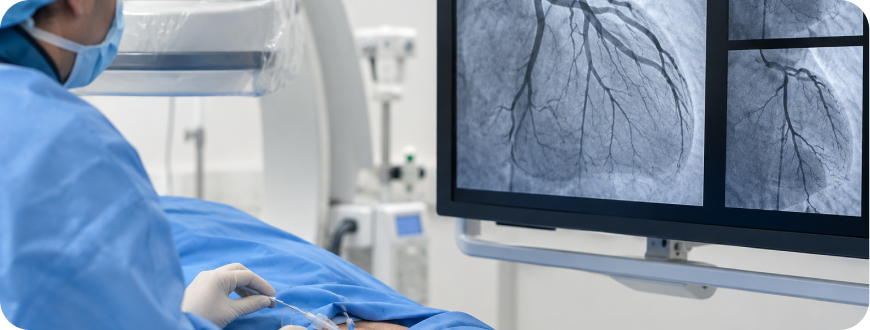
Angiography
This test uses imaging tests and a dye to look for blockages in the arteries. The dye is given through a blood vessel. It helps the arteries show up more clearly on the test images.
Treatment Options for Peripheral Vascular Disease at PCC
Peripheral Vascular Disease treatment has 3 major routes
Lifestyle Changes
Quitting tobacco, eating a diet rich in fruits, vegetables, and whole grains, exercising regularly, can help manage PAD and slow its progression.
Medications
Proper medication is required if you have any symptoms or complications of peripheral artery disease.
Statins
These medicines are used to help lower bad cholesterol. They help reduce plaque buildup in the arteries. Statins also lower the risk of heart attacks and strokes.
Blood Pressure Medicines
In case blood pressure medicines are required to control it. Dr. Ahmad may prescribe medicine to control it
Diabetes Medicine
Diabetes makes you more likely to get PAD. Talk with your healthcare team about your blood sugar goals and how to reach them
Medicines to prevent blood clots
Reduced blood flow in PAD can cause blood clots. Aspirin or another medicine, such as clopidogrel (Plavix), may be used to prevent blood clotting
Leg Pain Medicine
Cilostazol can improve walking symptoms in patients with claudication due to PAD.Dr. Tanveer Ahmad will check your heart history because cilostazol should not be used by people with heart failure
When Does Peripheral Vascular Disease Require a Procedure?
Sometimes, a surgery or procedure is needed to treat peripheral artery disease (PAD) or its symptoms.
Thrombolytic therapy
If a blood clot is blocking an artery, medicine may be given directly into the affected artery to dissolve the clot.
Angioplasty and stent placement
A catheter is placed in the artery. The balloon inflates, which makes the artery wider. A small wire mesh tube, called a stent, may be placed in the artery to keep the artery open.
Bypass surgery
A surgeon takes a healthy blood vessel from another part of the body. The vessel is connected below the blocked artery. The new pathway improves blood flow to the muscle.
Premier Choice Cardiology coordinates referral to a vascular surgeon or interventional specialist for each procedure.
How Do PVD Patients Protect Their Feet?
You can protect your feet by following these 7 steps:
Wash and dry your feet daily
Moisturize your feet daily and skip the area between your toes
Wear socks that are thick and fit well in shoes
Treat fungal infections such as athlete’s foot quickly
Trim toenails carefully
Check the feet daily for cuts and sores
See a podiatrist for bunions, corns, and calluses
Why Choose Premier Choice Cardiology?
At Premier Choice Cardiology, the care provided is based on your particular heart health requirements, and the practice is headed by Dr.Tanveer Ahmad, MD, FACC, who is board-certified in both internal medicine and cardiology.
Two Convenient Locations
Dr. Ahmad sees patients at two offices in Ocean County, one in Lakewood and one in Brick, so patients can choose whichever is closer to home.
Whole-patient care
We treat PVD alongside related conditions such as coronary heart disease, high blood pressure, and diabetes-related heart risk.
Recognized by Patients
Dr. Tanveer Ahmad has been widely recognized for listening attentively to the concerns of patients on US. News
On-site vascular testing
Your Blood flow tests are examined in our own accredited vascular lab. You will spend less time in the hospital and have less inconvenience for you
Coverage That Puts Heart Care First
A wide range of insurance plans are accepted to ensure expert heart care is always accessible and stress-free.
Empire BCBS
Horizon BCBS
AmeriHealth New Jersey
UnitedHealthcare
GEHA
Aetna
Cigna
Medicare
Premier Choice Cardiology ClinicLocations
Premier Choice Cardiology has offices in Lakewood and Brick, NJ. This makes it easier for patients in Ocean and Monmouth Counties to see a cardiologist close to home. Pick the location that’s most convenient for you and reach out to our team to book your appointment.
150 Chambers Bridge Rd, Suite 101, Brick, NJ 08723
Frequently Asked Questions
Does Premier Choice Cardiology Offer Telemedicine for PVD Consultations?
Telemedicine consultations are provided by Dr. Ahmad. Vascular testing requires an in-person visit. You can make an appointment by calling us on (732) 534-0736.
Do eggs cause plaque buildup in arteries?
Eating eggs in moderation is not directly linked to the cause of arterial plaque or heart disease. If you already have PAD, diabetes, or high cholesterol, Dr. Tanveer Ahmad will suggest how many eggs are right for you.
What not to do with peripheral artery disease?
With peripheral artery disease (PAD), you must avoid habits, products, and behaviors that further restrict blood flow or damage your blood vessels
What are the worst foods to avoid if you have clogged arteries?
Limit foods high in saturated and trans fats, excess added sugars, and sodium.
Can I wear compression socks if I have peripheral artery disease?
If you have PAD, consult your healthcare professional before using compression socks.